How to Choose a Pergola That Can Handle Florida Weather
Florida backyards are made for living outside, at least in theory. In practice, the midday sun can turn a patio into a griddle by 11 a.m., and an afternoon storm can send everyone running inside before the burgers are done. A well-built pergola changes that math. It gives you shade when you want it, airflow when you need it, and a place to gather that feels like an extra room. This guide walks through what to look for, so your pergola holds up to Florida heat, rain, and wind for years, not just one summer.
Start With How You Want to Use the Space
Picture Your Typical Day Out There
Before you look at materials or price, think about what will actually happen under the pergola. A shaded reading nook needs very different coverage than an outdoor kitchen or a lounge area next to the pool. If you plan to cook, you will want good ventilation and room for a grill. If you mostly entertain at night, lighting and a ceiling fan may matter more than full sun protection.
Freestanding or Attached
Pergolas come in two basic layouts. A freestanding pergola sits on its own posts and works well in the middle of a yard, over a pool deck, or at the end of a garden path. An attached pergola connects to the house and extends your indoor living area outward, which makes it a natural fit over a back patio or lanai. Your choice affects permits, drainage, and how the structure ties into your roofline.
Pick Materials That Fight Back Against Humidity
Why Aluminum Has Become the Florida Favorite
Wood pergolas look lovely in catalog photos, but Florida humidity is hard on them. Without regular sealing and staining, wood can warp, crack, rot or attract termites. Vinyl holds up better but can fade under strong UV exposure. Powder-coated aluminum has become a popular choice across the state because it resists rust, does not rot and keeps its color with little more than an occasional rinse with the garden hose.
Ask About Wind Ratings
Hurricane season is part of life here, so wind resistance is not optional. Florida's building code sets wind load requirements that vary by location, and coastal areas generally face stricter standards. Any contractor you hire should be able to explain how the design meets local requirements and should handle the permit so the structure is inspected and approved.
Decide How Much Control You Want Over Sun and Rain
Fixed Slats Versus Louvered Roofs
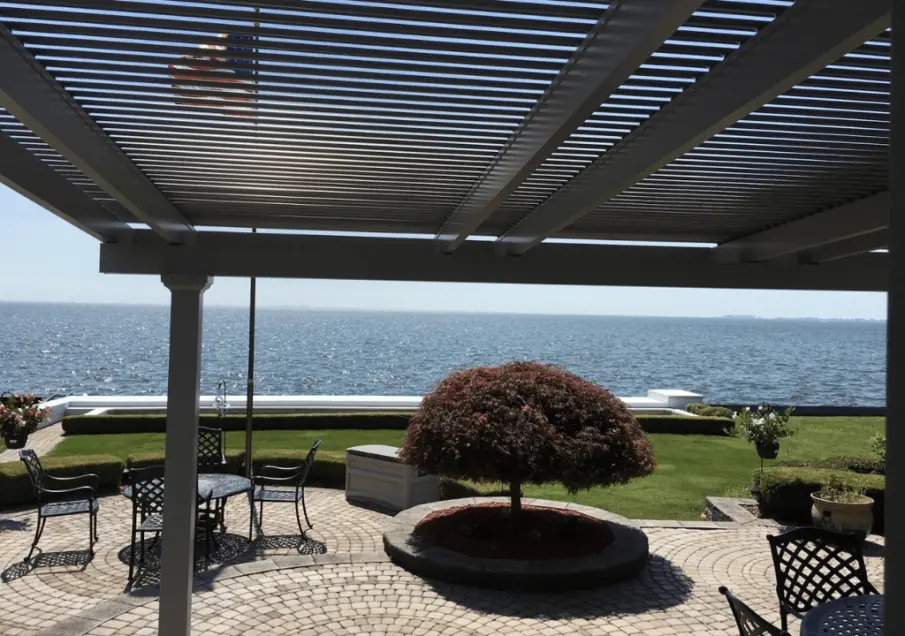
A traditional pergola has fixed slats that provide partial shade. That works well if you enjoy dappled light and do not mind getting a little wet in a storm. An operable louvered pergola takes things further. Its roof panels rotate, so you can open them to let in light and breeze or close them to block the sun and shed rain.
Motorized Features Worth Considering
Many louvered systems can be motorized and controlled with a remote or a wall switch. This is especially handy when a storm rolls in fast and you do not want to climb a ladder to adjust anything. Integrated LED lighting and ceiling fans are also popular additions, since a gentle breeze makes a big difference on humid evenings and good lighting stretches the use of the space well past sunset.
Plan the Finishing Touches Early
Make It Feel Like a Room
A pergola looks best when it is designed as part of the whole outdoor area rather than added as an afterthought. Think about where furniture, planters and walkways will go before the posts are set. Climbing plants such as jasmine or bougainvillea can soften the look and add fragrance, while outdoor rugs and weather-resistant cushions make the space feel finished.
Consider Future Upgrades
If you think you might want more protection later, ask whether the design can accommodate screens or connect to a patio enclosure or sunroom down the road. Planning for that possibility now can save you from tearing out and rebuilding parts of the structure later.
Choose an Installer Who Knows the Local Conditions
What to Look for in a Contractor
A pergola is a long-term investment, so the installer matters as much as the design. Look for a licensed contractor with local experience, clear communication about timelines, and someone who manages permits and any HOA approvals for you. Ask to see completed projects in your area, and find out whether the company uses its own installation crews or hands the work off to subcontractors.
For homeowners in the Tampa Bay area, Lifestyle Remodeling is one company that designs and installs custom aluminum and motorized louvered structures. Its team handles everything from the in-home consultation and design through permitting and installation, which makes it a practical starting point if you are shopping for a pergola Tampa homeowners can enjoy through every season.
A good pergola should make you want to spend more time outside, not give you one more thing to maintain. Take the time to match the design to your daily routine, choose materials built for humid air and strong storms, and work with a contractor who understands local codes. Do that, and your backyard can finally become the comfortable, shaded retreat it was meant to be.